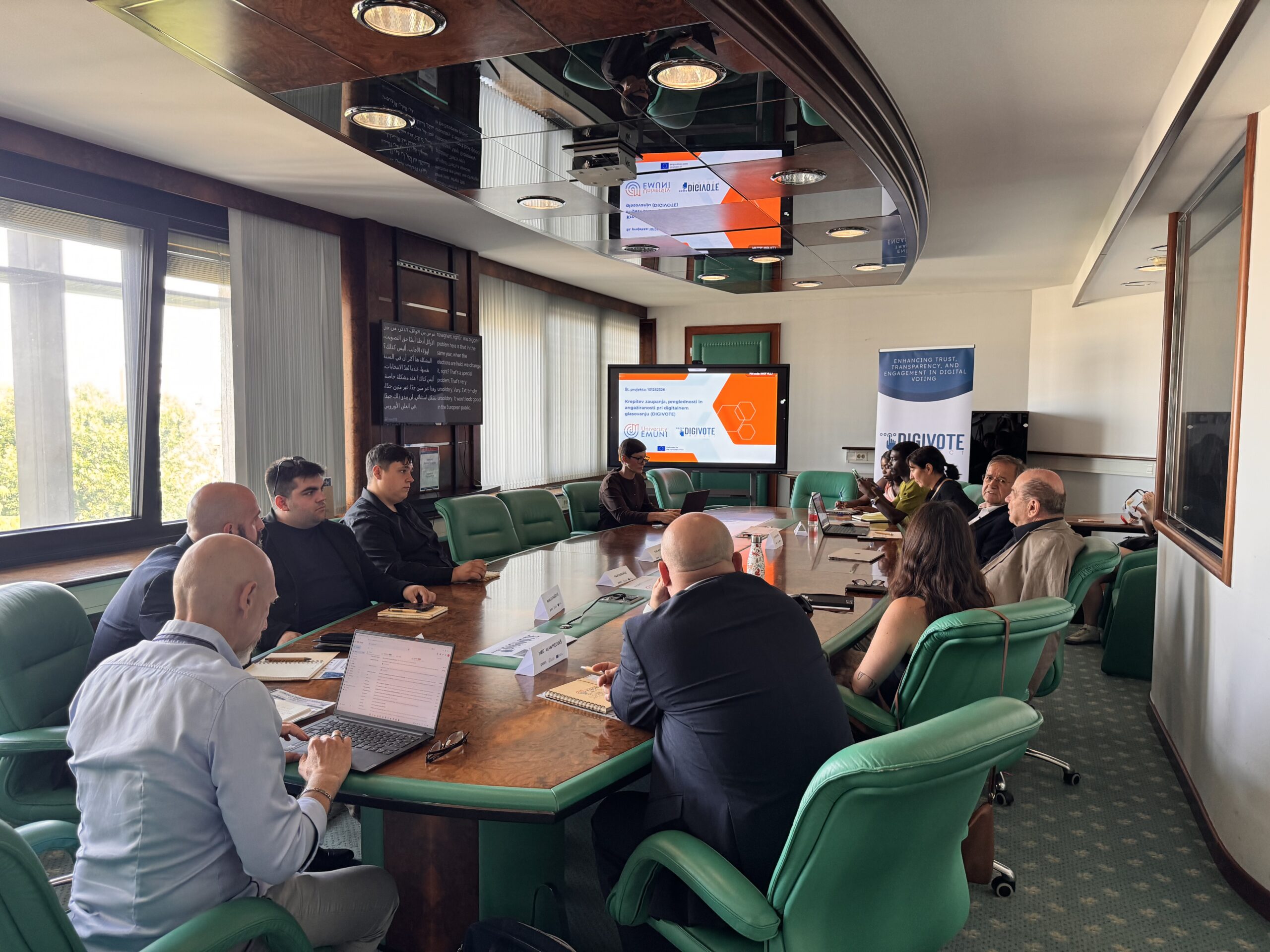
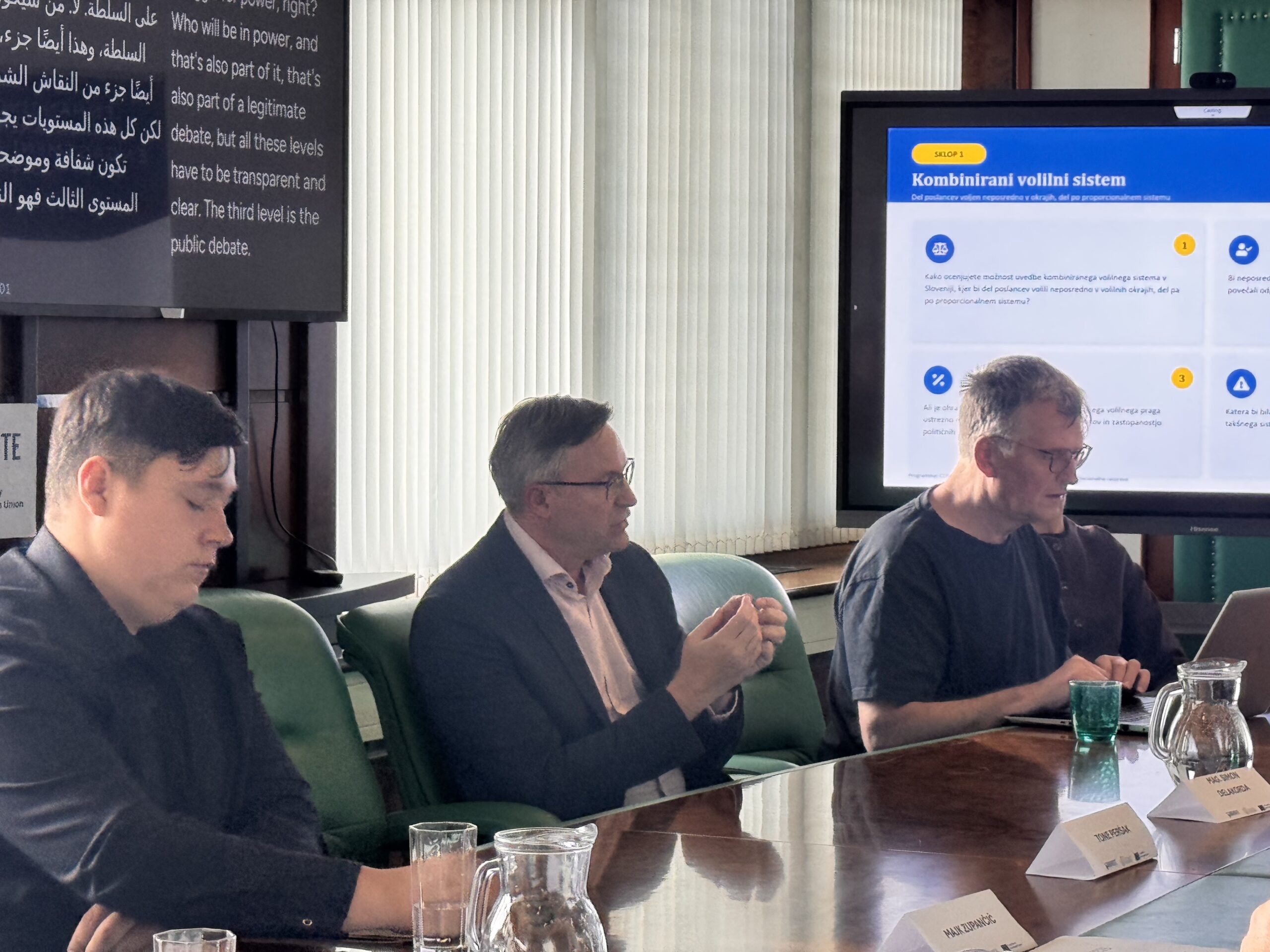
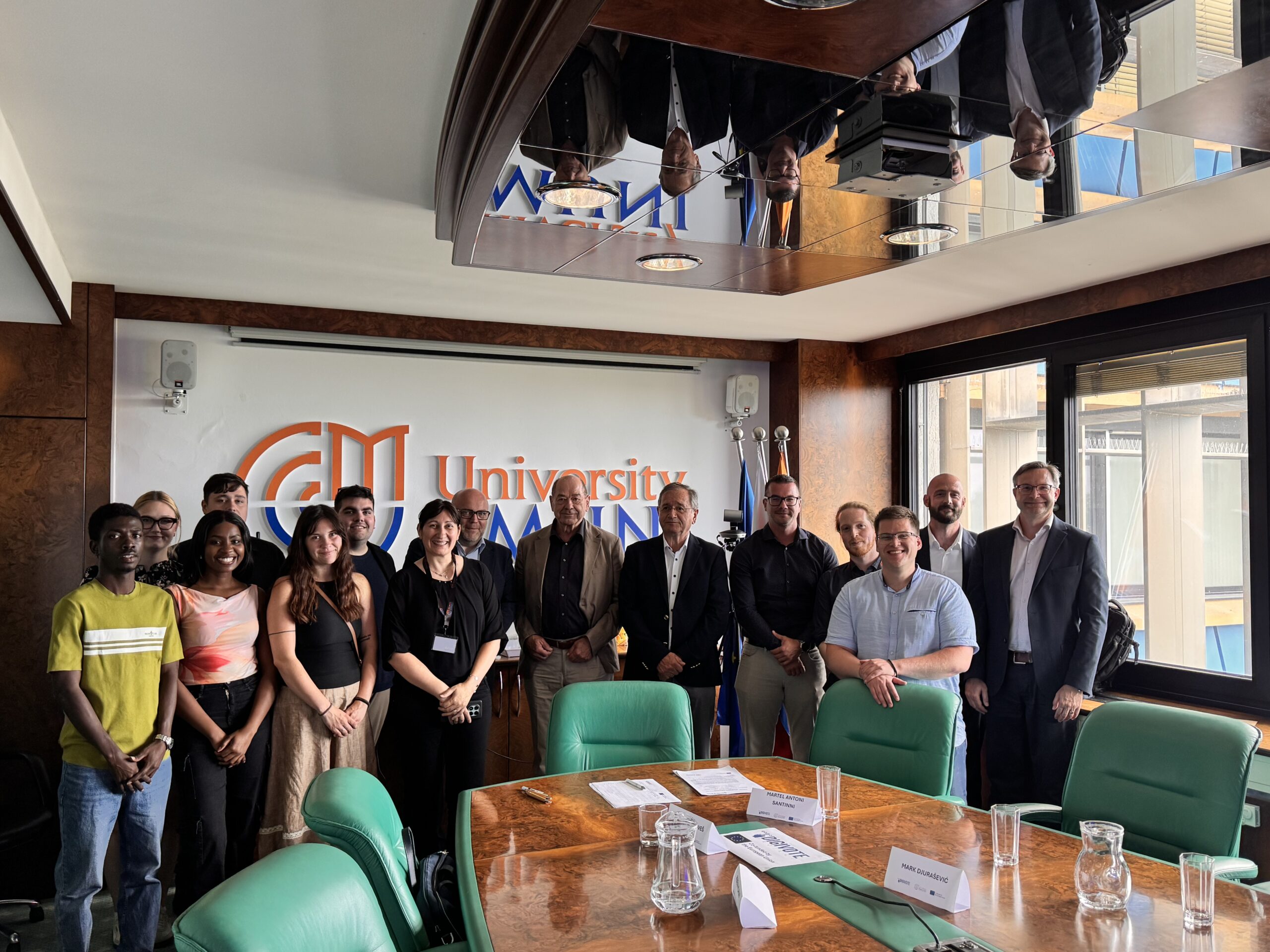
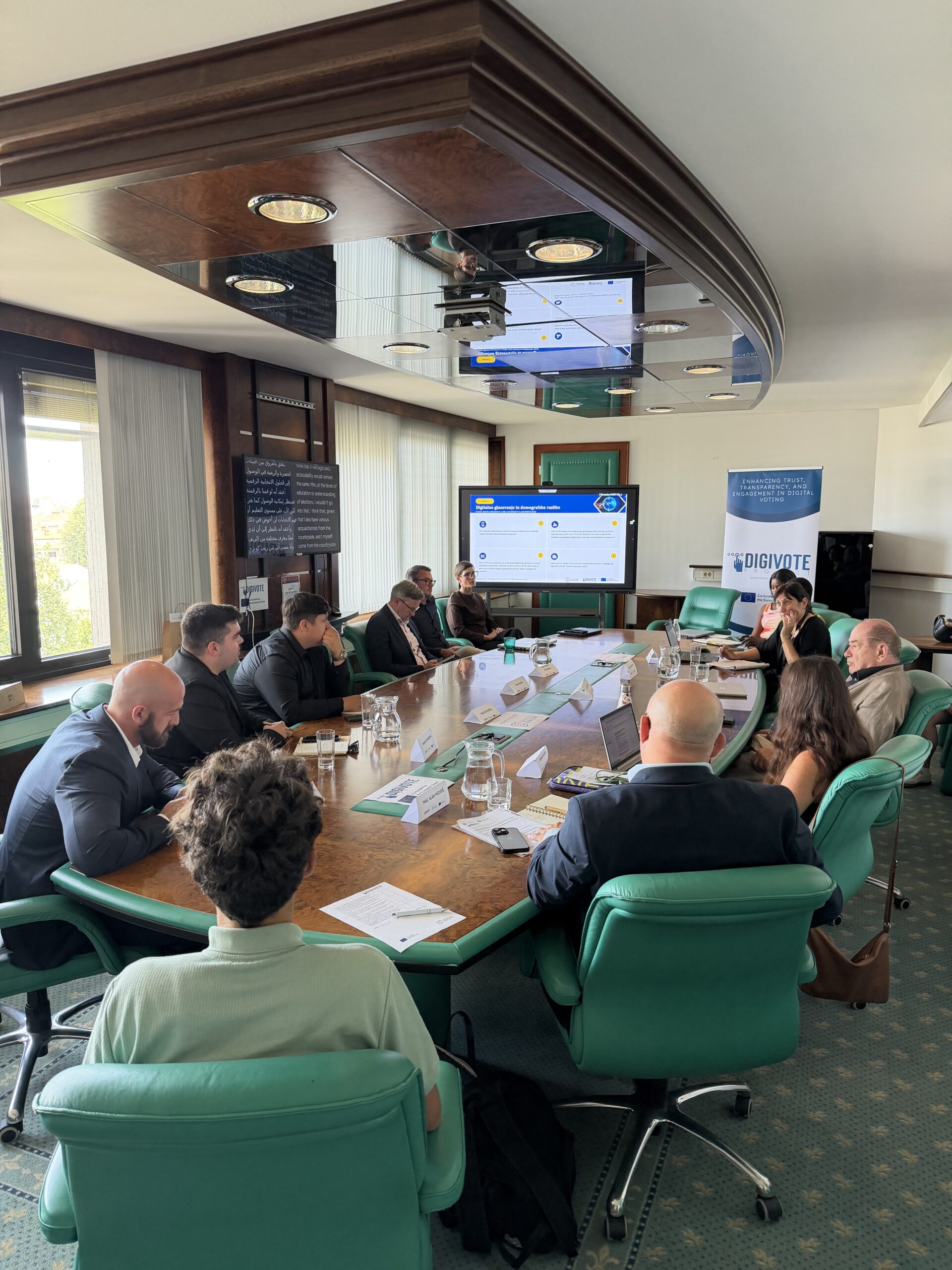
On 15 June 2026, EMUNI University hosted the Slovenian national event of the European DIGIVOTE project, dedicated to the future of elections and the challenges of digital transformation in democratic processes. The event brought together representatives of academia, politics, civil society and youth organisations to discuss key issues related to electoral reform, democratic participation and the future of digital voting.
The first part of the event focused on possible reforms of the electoral system. Dr. Rado Bohinc highlighted several shortcomings of the current arrangement, particularly regarding the equality of voting rights, complexity of the current voting system and the actual influence of voters on the election of Members of Parliament. He drew attention to long-standing concerns about unequal representation and the limited connection between voters and elected representatives. Emeritus Professor Dr. Franc Grad presented the concept of a combined electoral system that would integrate elements of both proportional and majority-based models. In his view, such a system could strengthen the direct accountability of elected representatives to voters while preserving the principles of fair political representation. He also stressed that any future reform must remain consistent with constitutional principles and safeguard the legitimacy and stability of the democratic system. The discussion was in favor of preferential vote as one of the possible (non-obligatory) solutions, but it was agreed that for such decisions we need professional/academic debate, as well as political and public debates.
A significant part of the discussion was devoted to digital voting and its impact on different demographic groups. Rebeka Mlakar from the Slovenian Youth Council highlighted the challenges of involving young people in political processes and pointed to the widespread perception among young citizens that their views have limited influence on decision-making. It was pointed out that youth should be more included into politics also during the educational path.
The final part of the event addressed digital elections and digital literacy. Simon Delakorda from the Institute for Electronic Participation presented key findings of their research and reflected on more than two decades of discussions on digital voting in Slovenia. He noted that Slovenia still lags behind the EU average in digital skills, demonstrating that the introduction of digital voting is not merely a technological issue but also a societal and educational challenge. One of the most noteworthy findings of the DIGIVOTE research, which was presented by ddr. Maja Pucelj, was that the strongest reservations towards digital voting were expressed by people aged 25–34, despite belonging to one of the most digitally literate generations.
Participants were not unified in the discussion if the digital voting would increase the participation at the elections or not. Participants agreed that technology itself is not the primary obstacle. Rather, public trust, cybersecurity, transparency and a clear legal framework will be decisive factors for any future implementation of digital voting. They pointed out that they are generally in favour of digital voting, but it should be combined with paper voting. They also pointed out that voting is a ritual and expression of democracy, not just the act of voting, so we should take also this aspect into the consideration. Several speakers supported the idea of pilot projects at the local level as a practical way of testing solutions, gathering experience and gradually building public confidence in digital democratic processes. They were unified in the idea of supporting e-voting in the form of combined system.
The discussion confirmed that the future of elections extends beyond technology. It is equally shaped by democratic legitimacy, citizen inclusion and trust in institutions. These themes will remain at the core of the DIGIVOTE project’s future research and policy activities.
More information about the project is available at:
https://emuni.si/digivote/