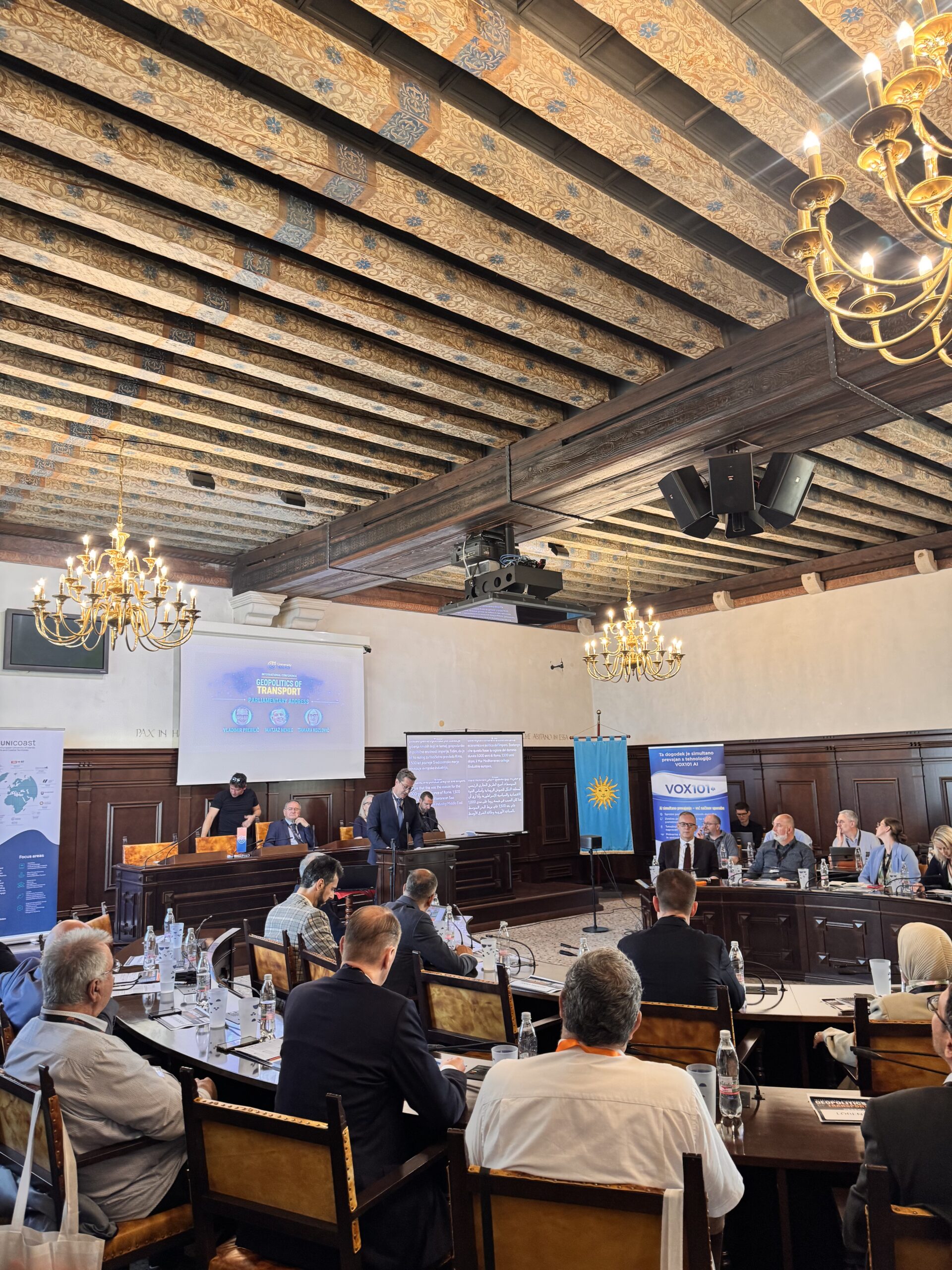
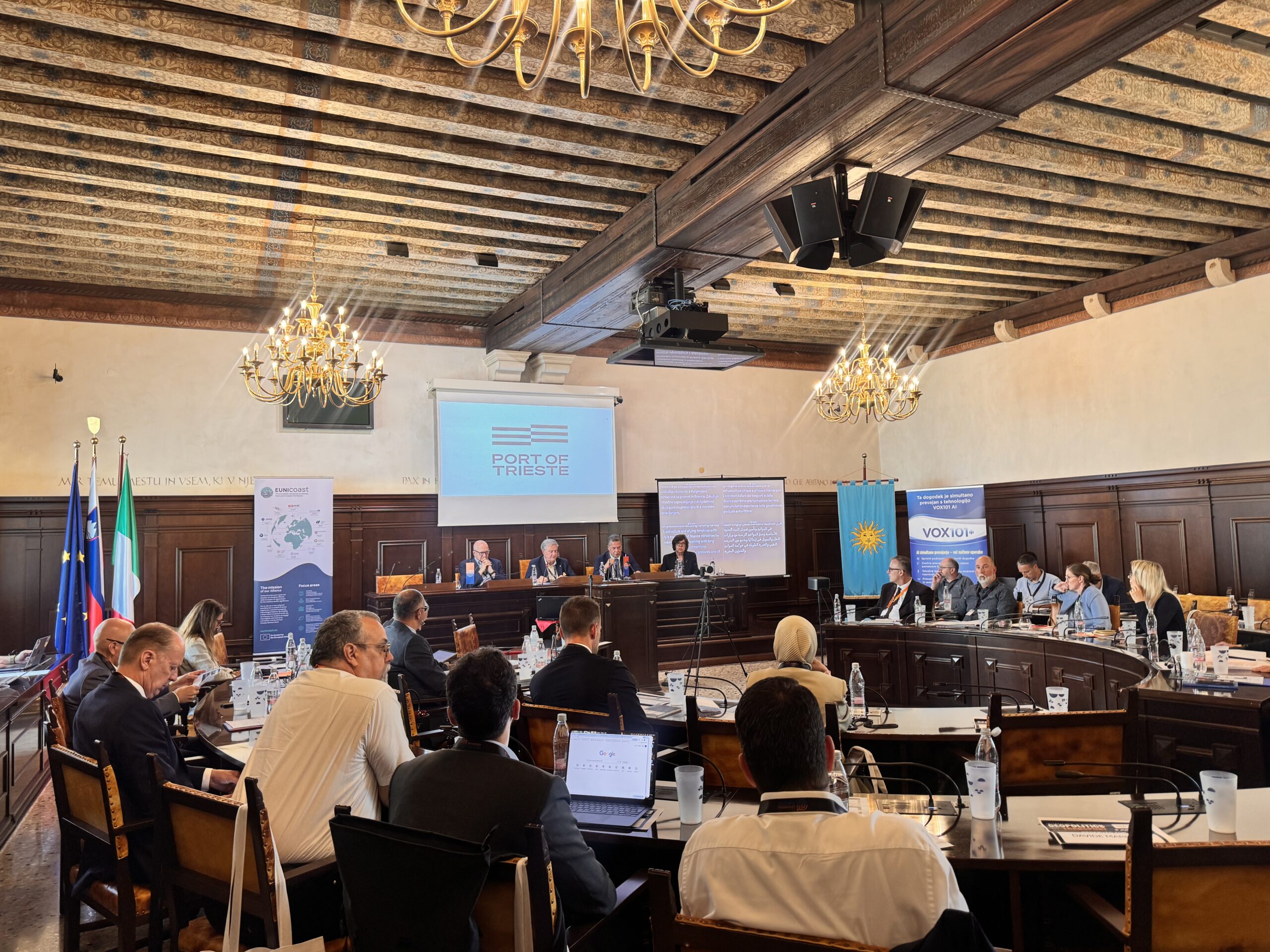
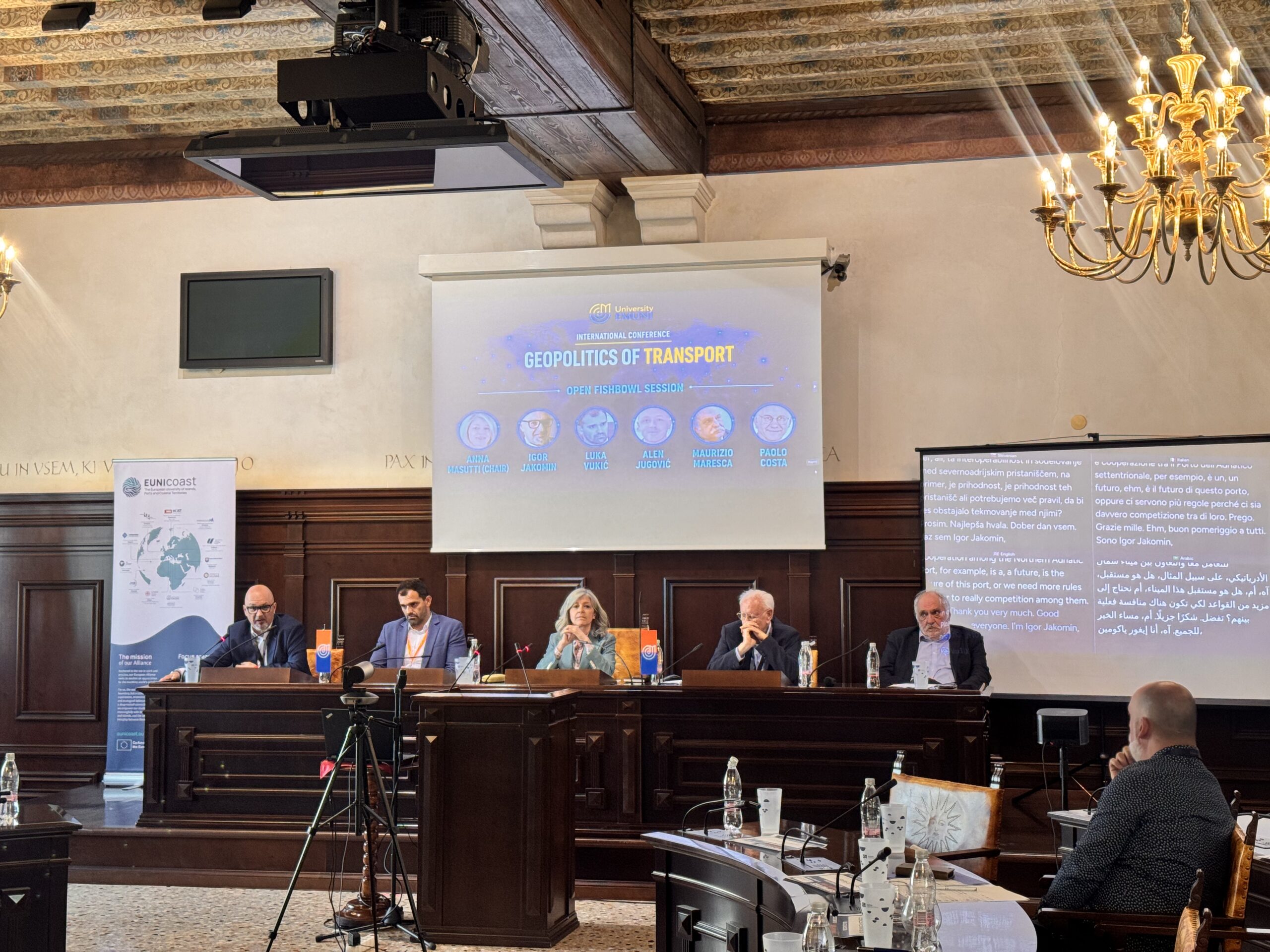
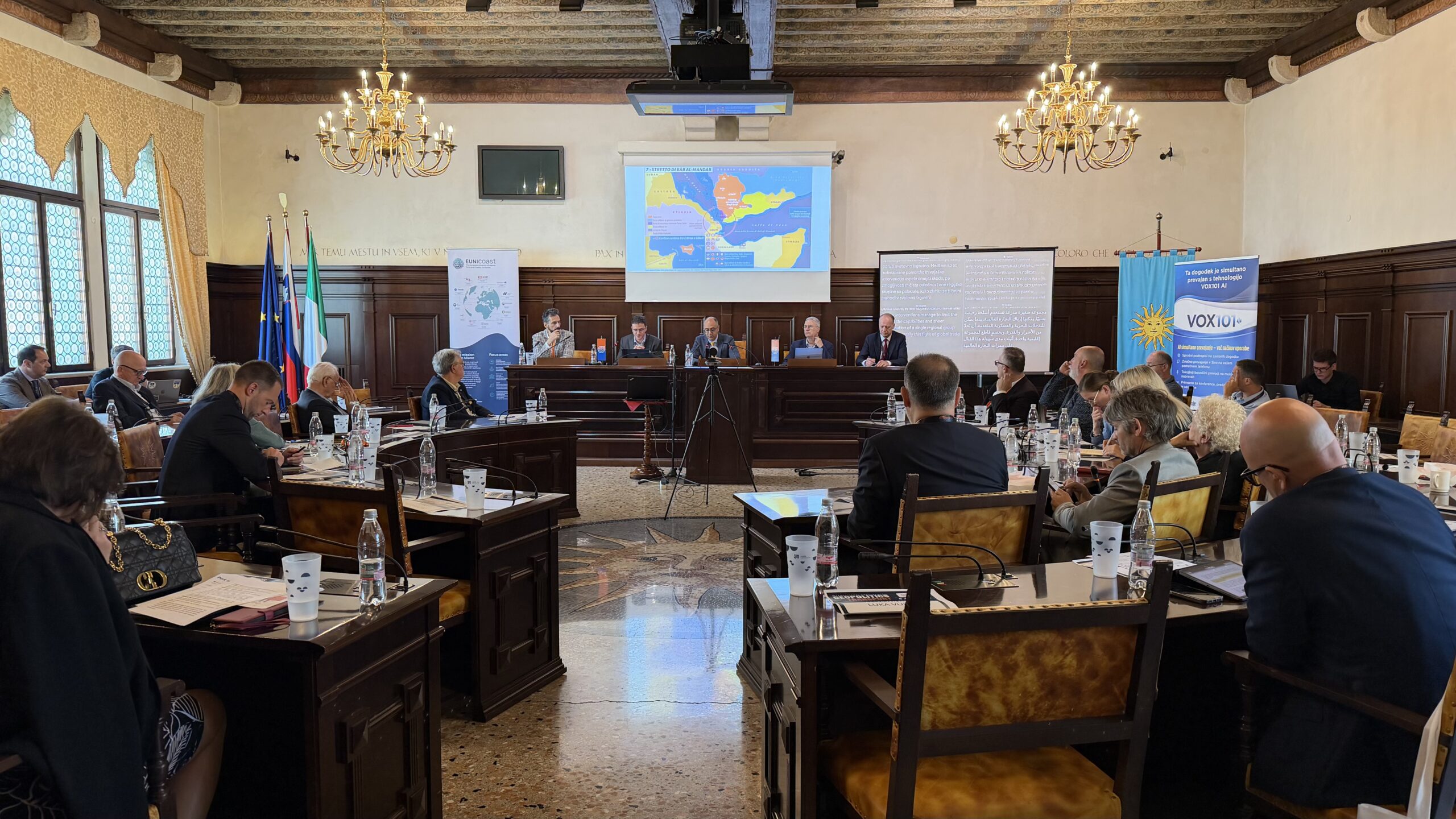
Koper, 8 June 2026 – EMUNI University, in cooperation with the Bled Strategic Forum and within the EUNICoast alliance, hosted the international conference “Geopolitics of Transport” at the Praetorian Palace in Koper. Bringing together policymakers, diplomats, academics, transport experts and port executives from across Europe and the Mediterranean, the conference explored the growing geopolitical significance of transport corridors, port governance and geoeconomics in a rapidly changing global environment.
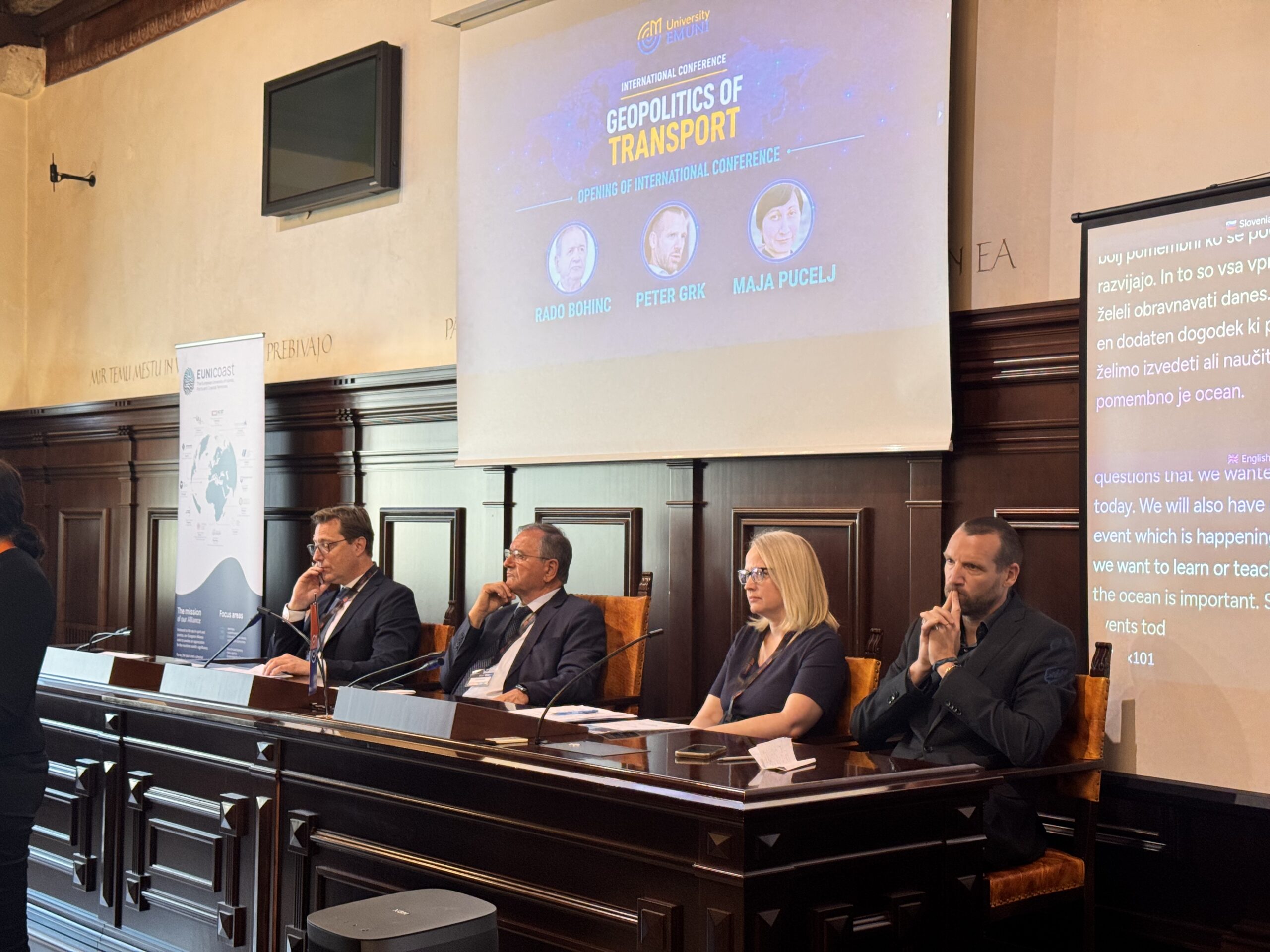
The conference was opened by Prof. Dr. Rado Bohinc, President of EMUNI University, Mr Peter Grk, Secretary General of the Bled Strategic Forum, and Dr. Maja Pucelj, EUNICoast Local Coordinator. In their welcome addresses, they emphasized the strategic role of transport infrastructure in strengthening economic resilience, regional cooperation and security.
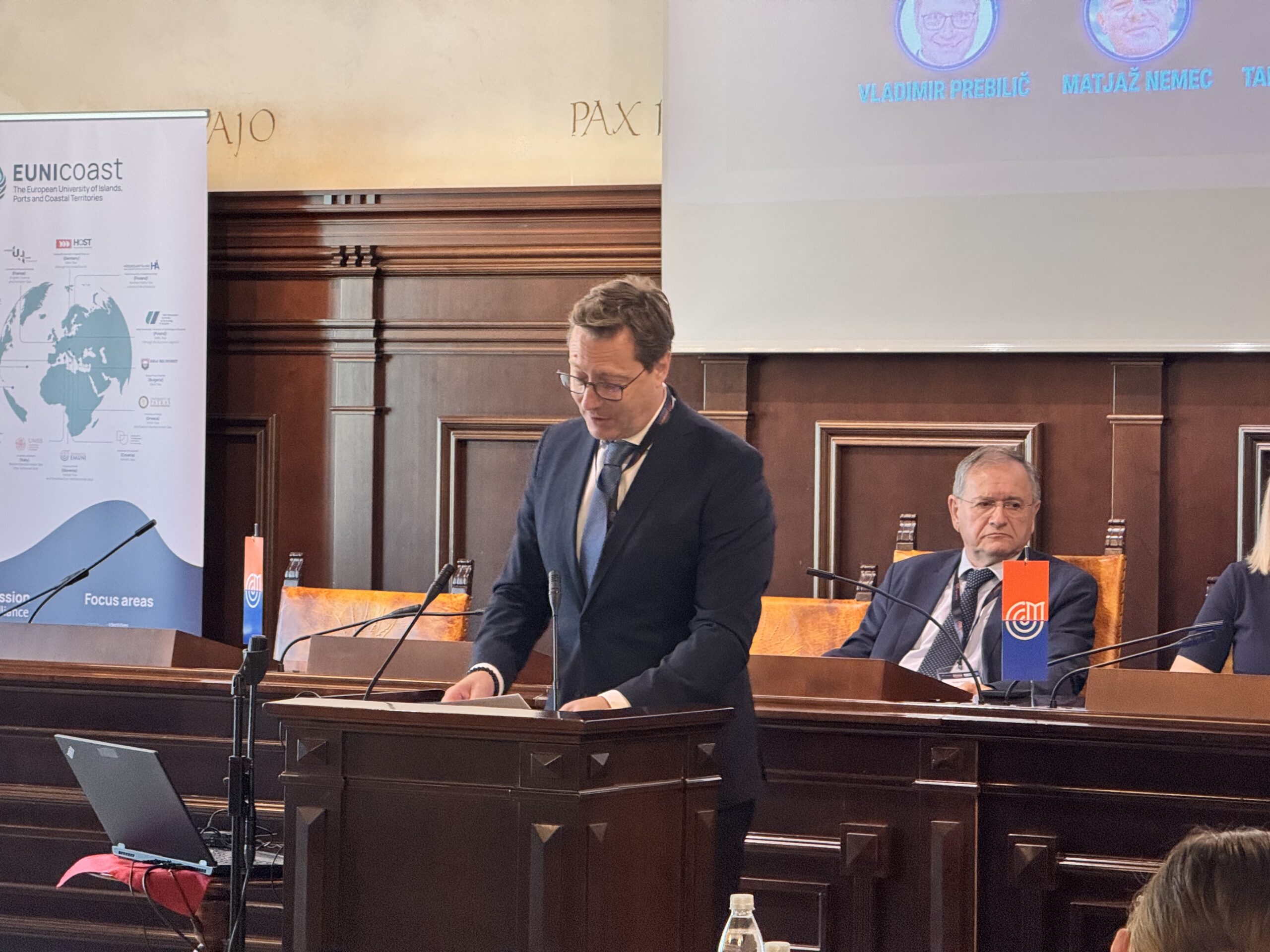
The opening keynote address was delivered by Minister Tone Kajzer, who provided reflections on European and Mediterranean transport diplomacy and the importance of connectivity in an increasingly complex geopolitical landscape.
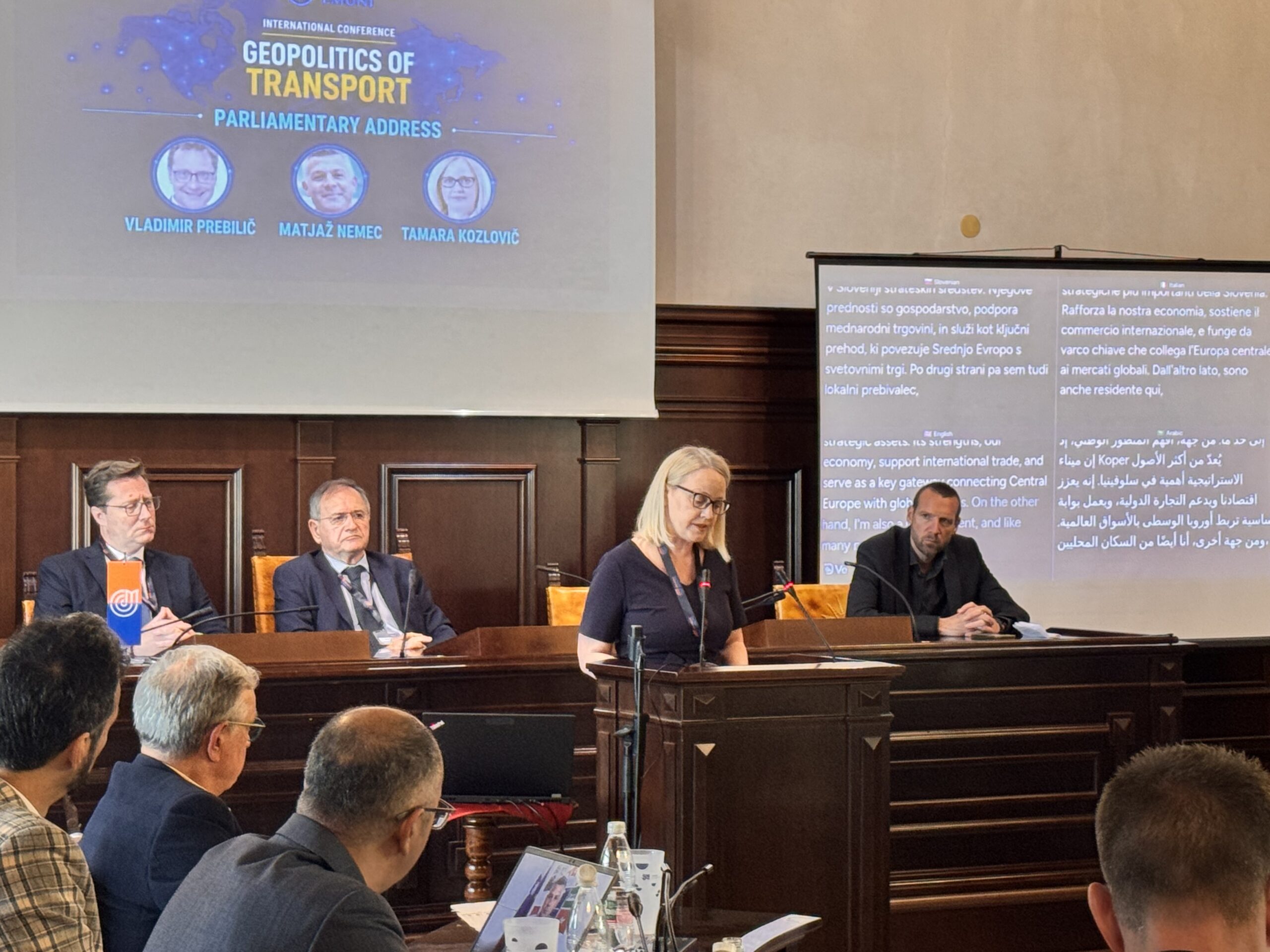
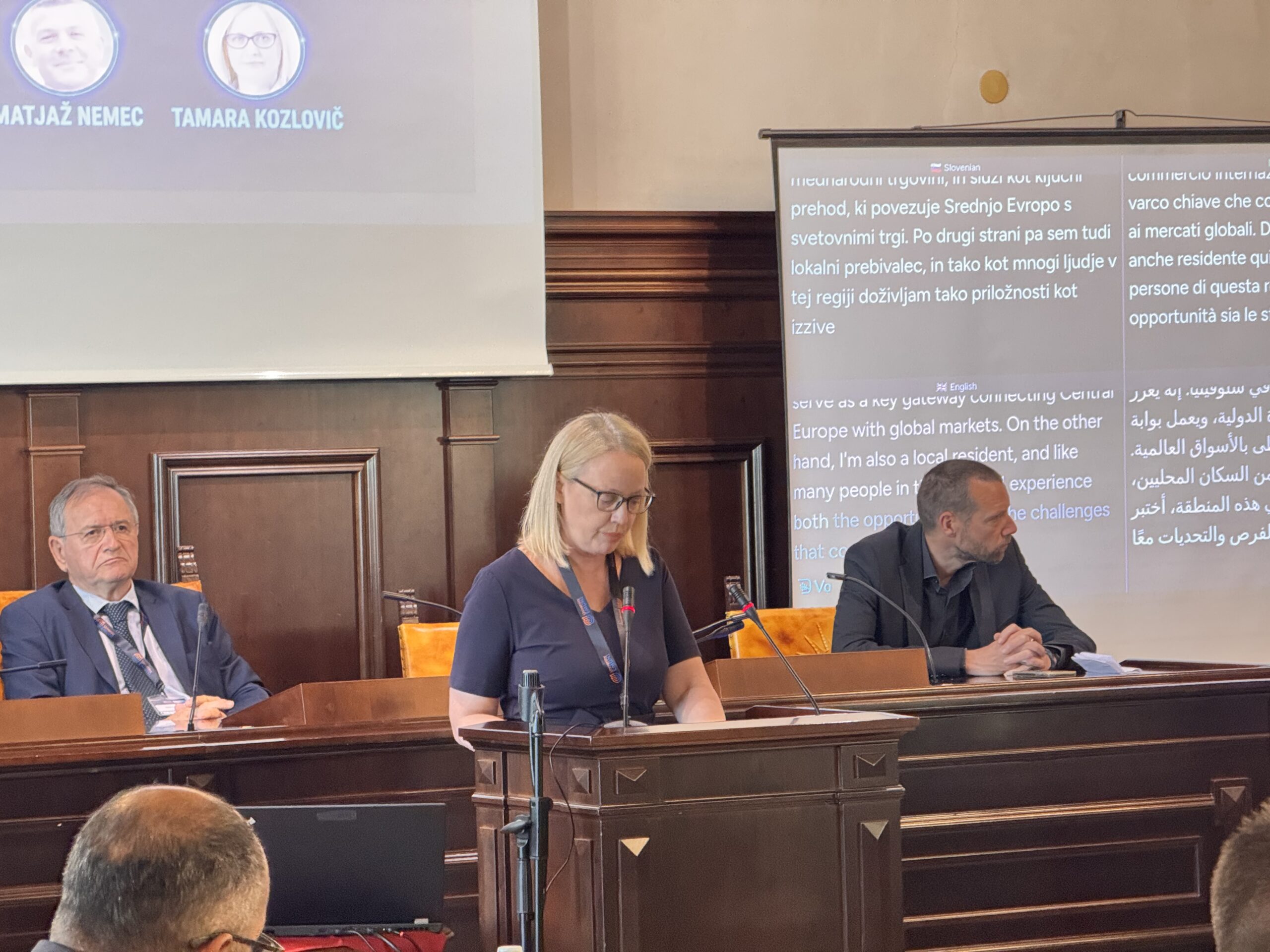
The keynote parliamentary session featured Mr Vladimir Prebilič, Member of the European Parliament, Mr Matjaž Nemec, Member of the European Parliament, and Ms Tamara Kozlovič, Member of the Slovenian Parliament. Their contributions focused on Mediterranean regional development, the European Union’s role in fostering regional stability, and the relationship between local communities and ports as drivers of economic growth.
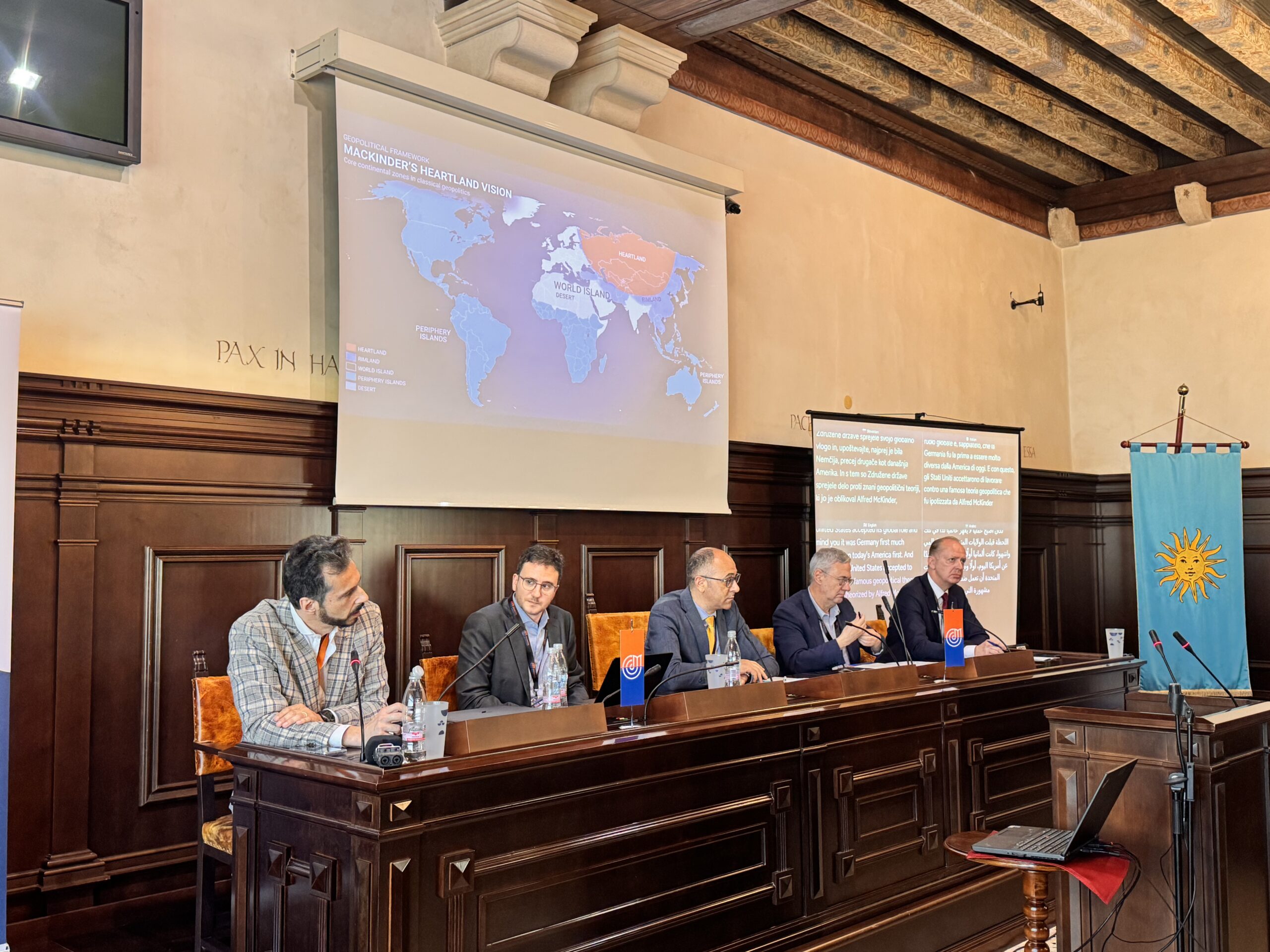
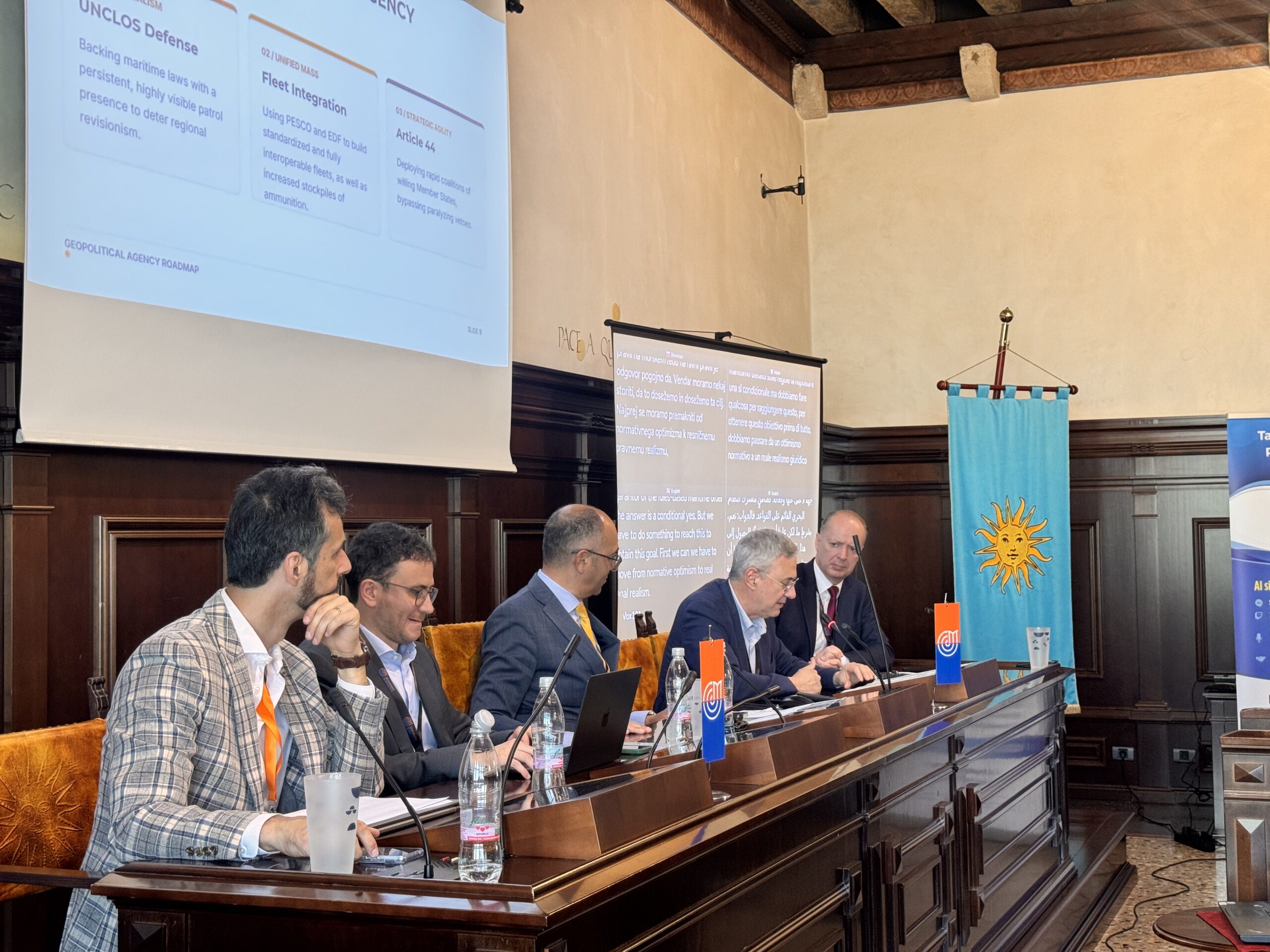
An introductory panel chaired by Dr Mounir Ghribi, EMUNI University, examined security policy, EU maritime strategy and maritime rule of law. Dr Andrej Benedejčič, Permanent Representative of the Republic of Slovenia to NATO, discussed contemporary security challenges and their implications for transport networks. Prof. Claudio Cressati, University of Udine, addressed the European Union’s role as a guarantor of freedom of navigation, while Dr Luka Juri, EMUNI University, analysed political rebalancing in the Mediterranean region. Mr Lorenzo Noto, from the Italian geopolitical journal Limes, explored whether the Mediterranean remains an open sea amid increasing geopolitical competition.
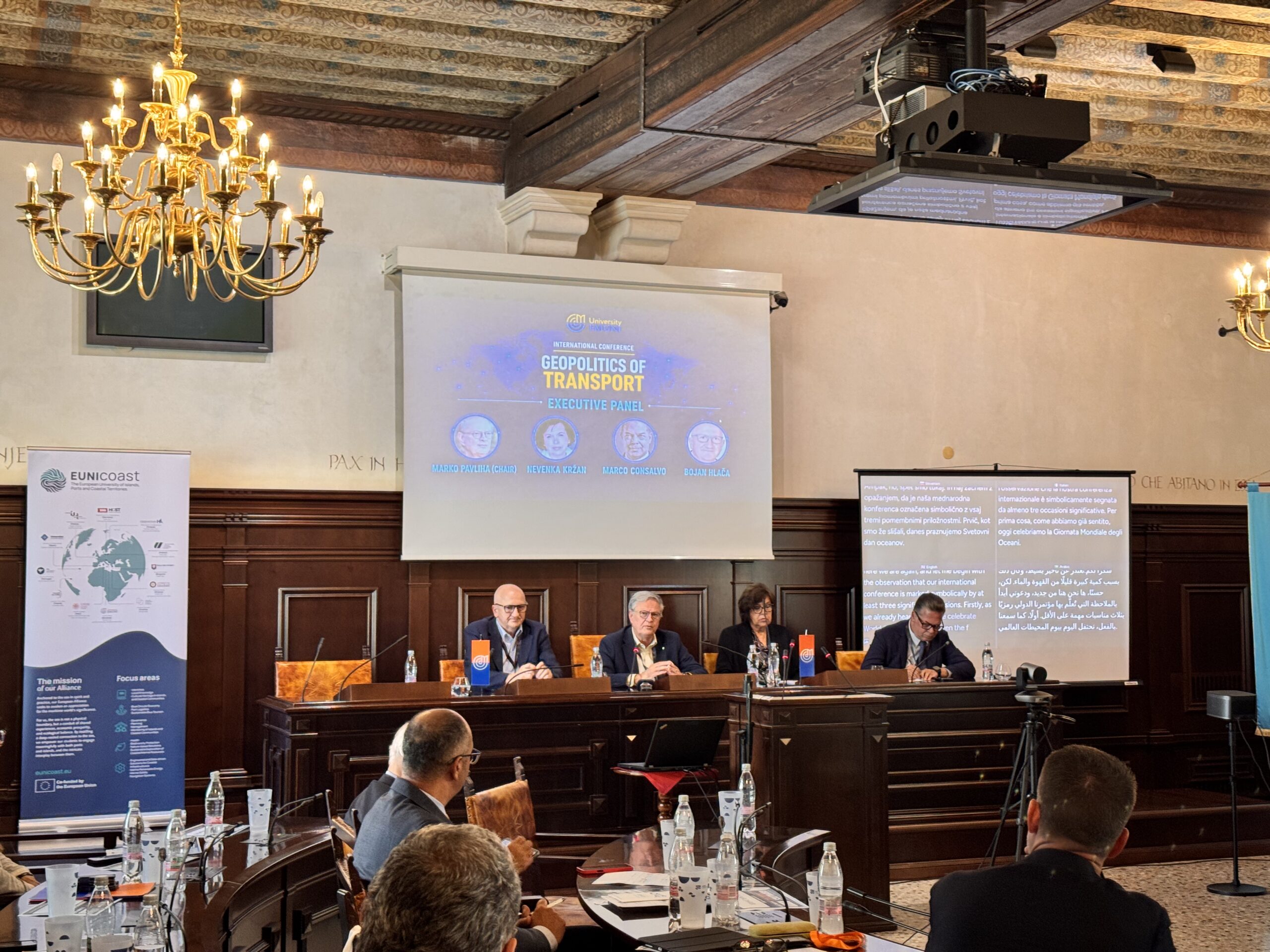
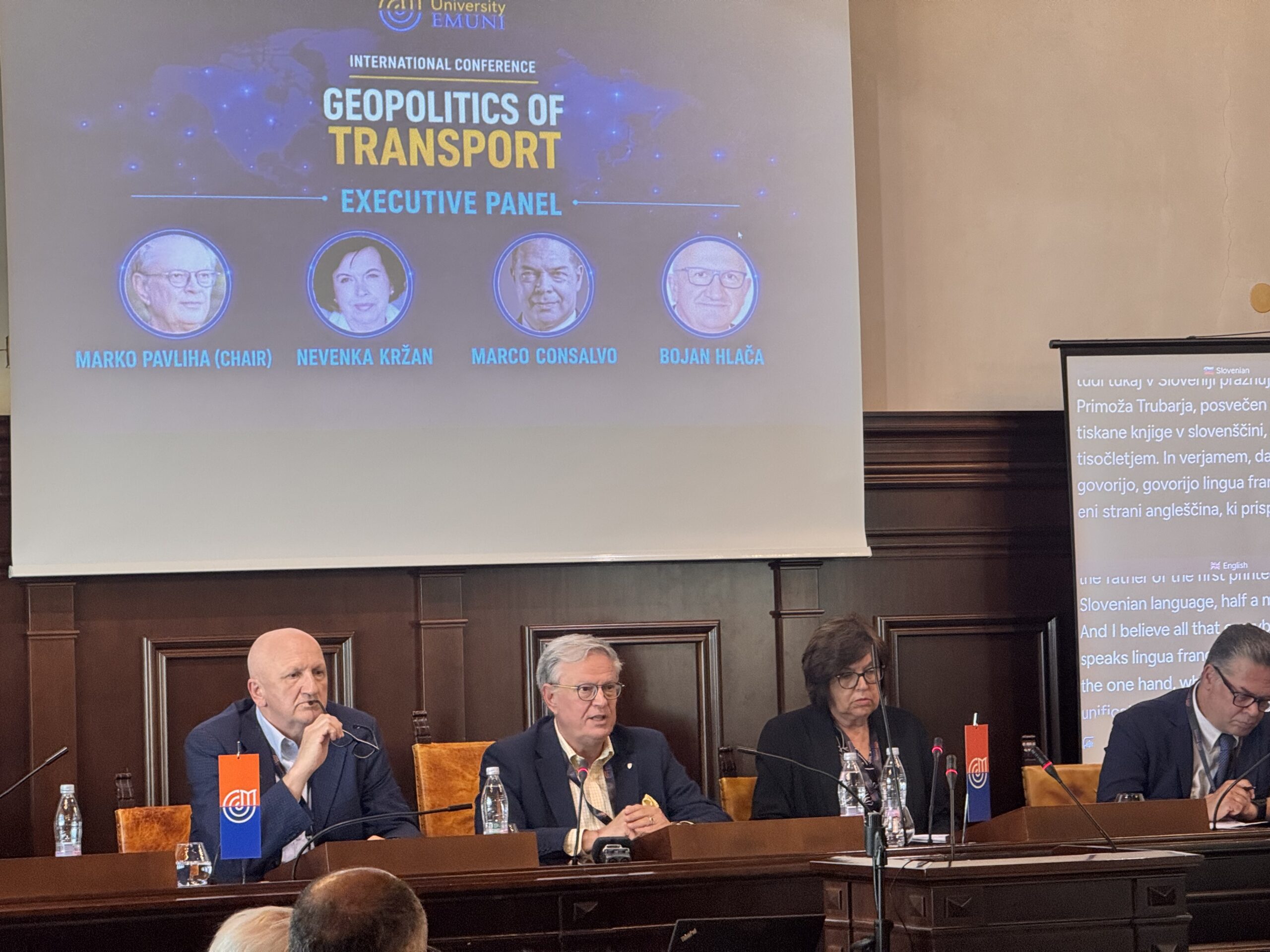
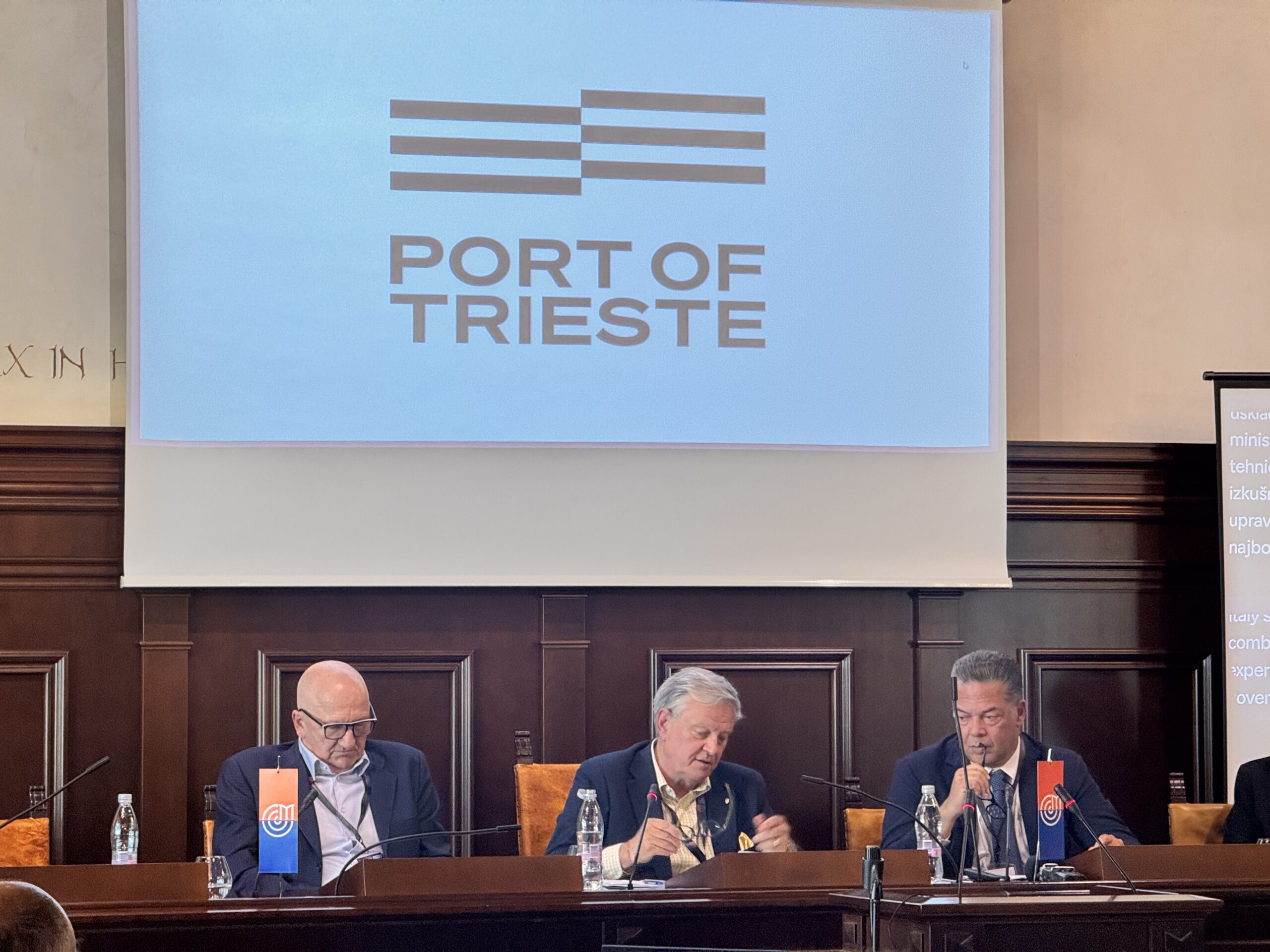
The morning programme concluded with an executive panel chaired by Prof. Dr. Marko Pavliha, University of Ljubljana, entitled “Are We All on the Same Boat? Mediterranean Policy in an Era of International Crisis.” The discussion brought together Ms Nevenka Kržan, President of the Management Board of Luka Koper, Mr Marco Consalvo, President of the Eastern Adriatic Sea Port Authority (Trieste and Monfalcone), and Mr Bojan Hlača, President of the Governing Council of the Port of Rijeka Authority. The speakers discussed the challenges facing Mediterranean ports amid geopolitical uncertainty, changing trade routes and increasing competition, while highlighting the importance of regional cooperation and infrastructure investment.
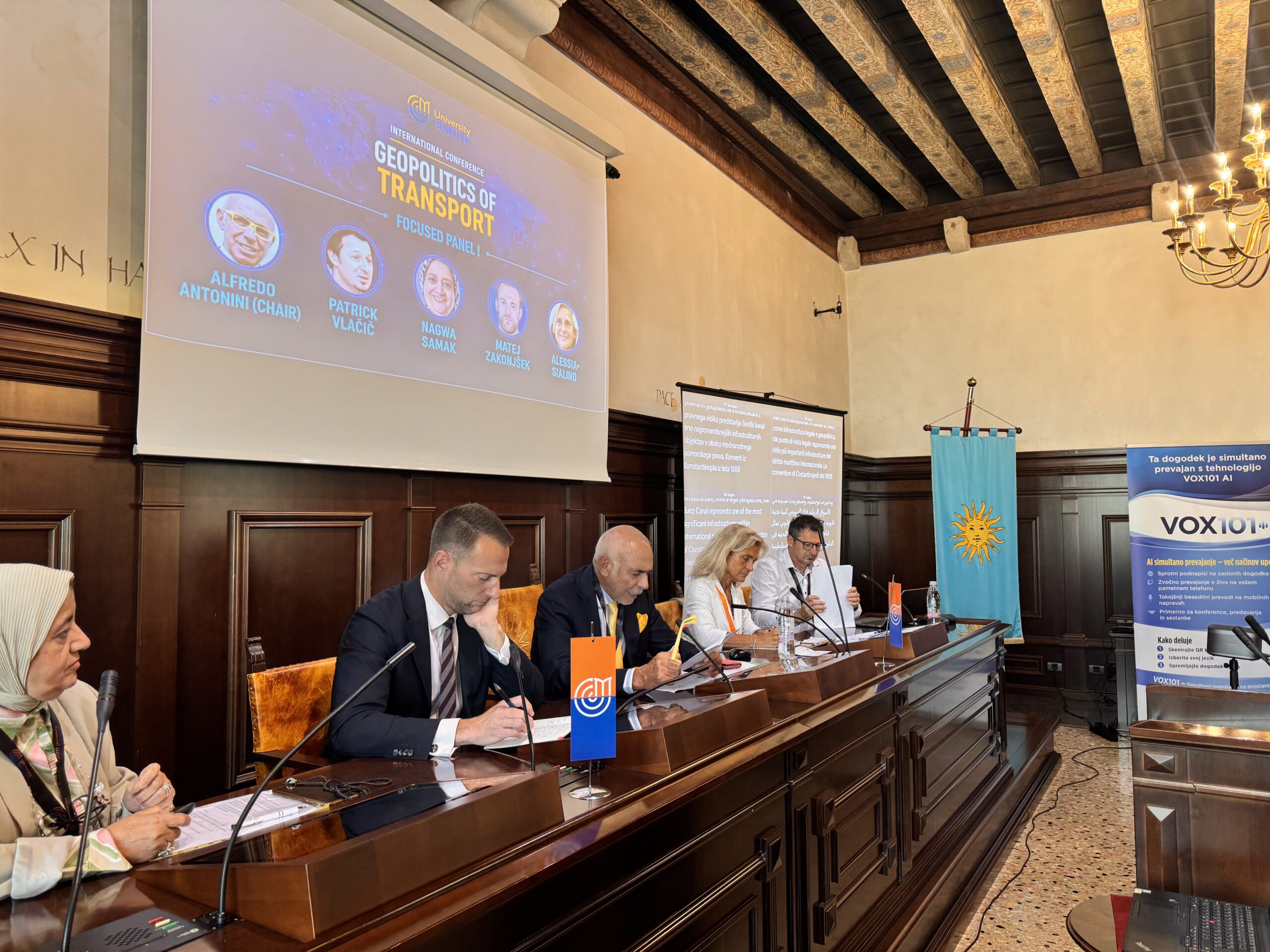
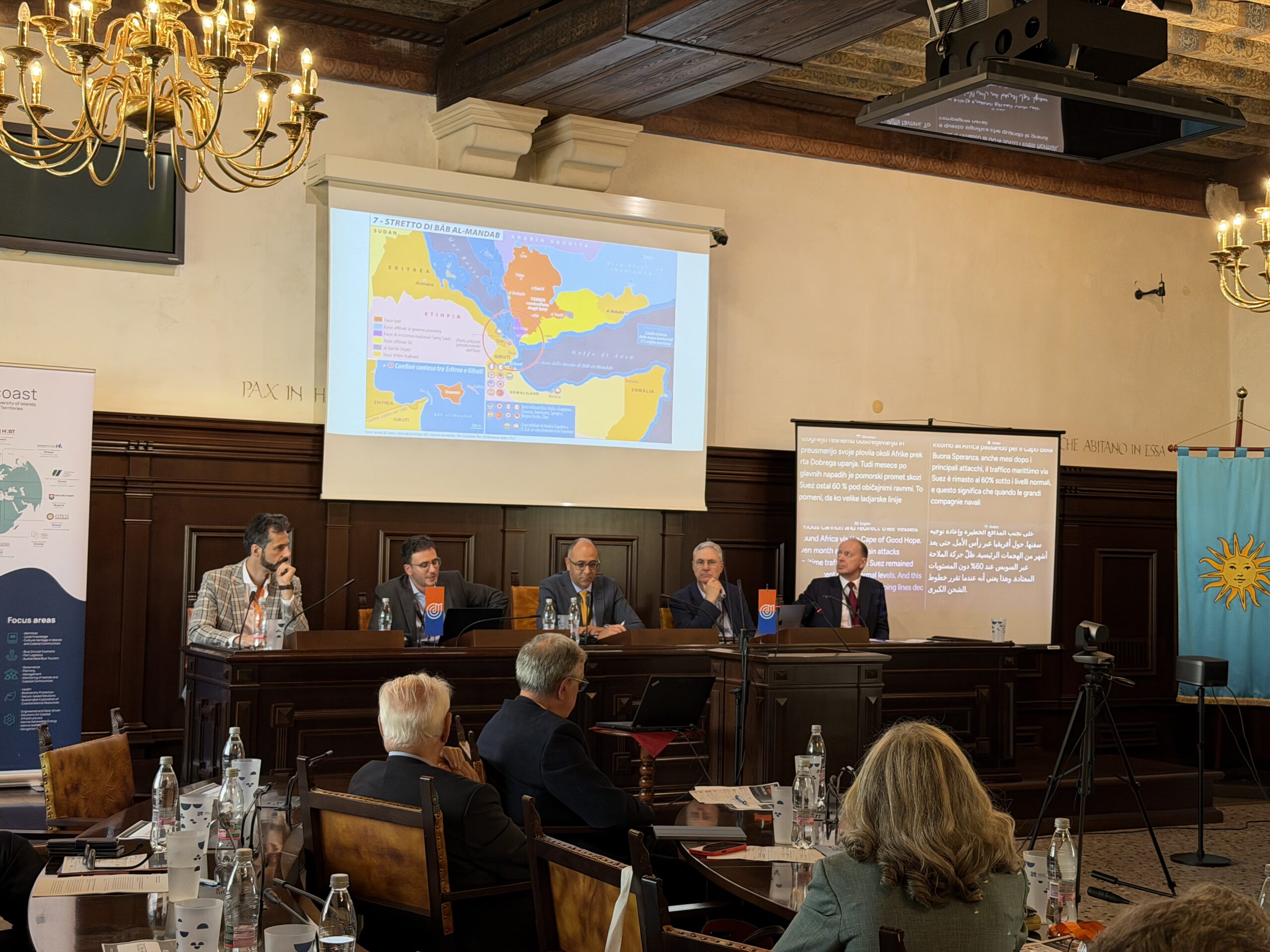
Following the networking lunch, the conference continued with Focused Panel I, chaired by Prof. Alfredo Antonini, University of Udine, under the title “From Suez Shocks to Arctic Shortcuts: Power Shifts, Maritime Insecurity, and the Future of the Mediterranean in Global Trade.” The panel examined how geopolitical tensions and emerging transport routes are reshaping global trade. Prof. Dr. Nagwa Samak, Galala University, analysed the impact of changing trade costs on investment decisions and sovereign risk profiles. Prof. Dr. Patrick Vlačič, University of Ljubljana, addressed geopolitical instability, the rule of law and freedom of navigation. Mr Matej Zakonjšek, Director of the Permanent Secretariat of the Transport Community, discussed whether European transport corridors should function as a coordinated network or as competing routes, while Ms Alessia Sialino, lawyer and journalist, presented perspectives on the India–Middle East–Europe Economic Corridor (IMEC) and the importance of intermodal connectivity.
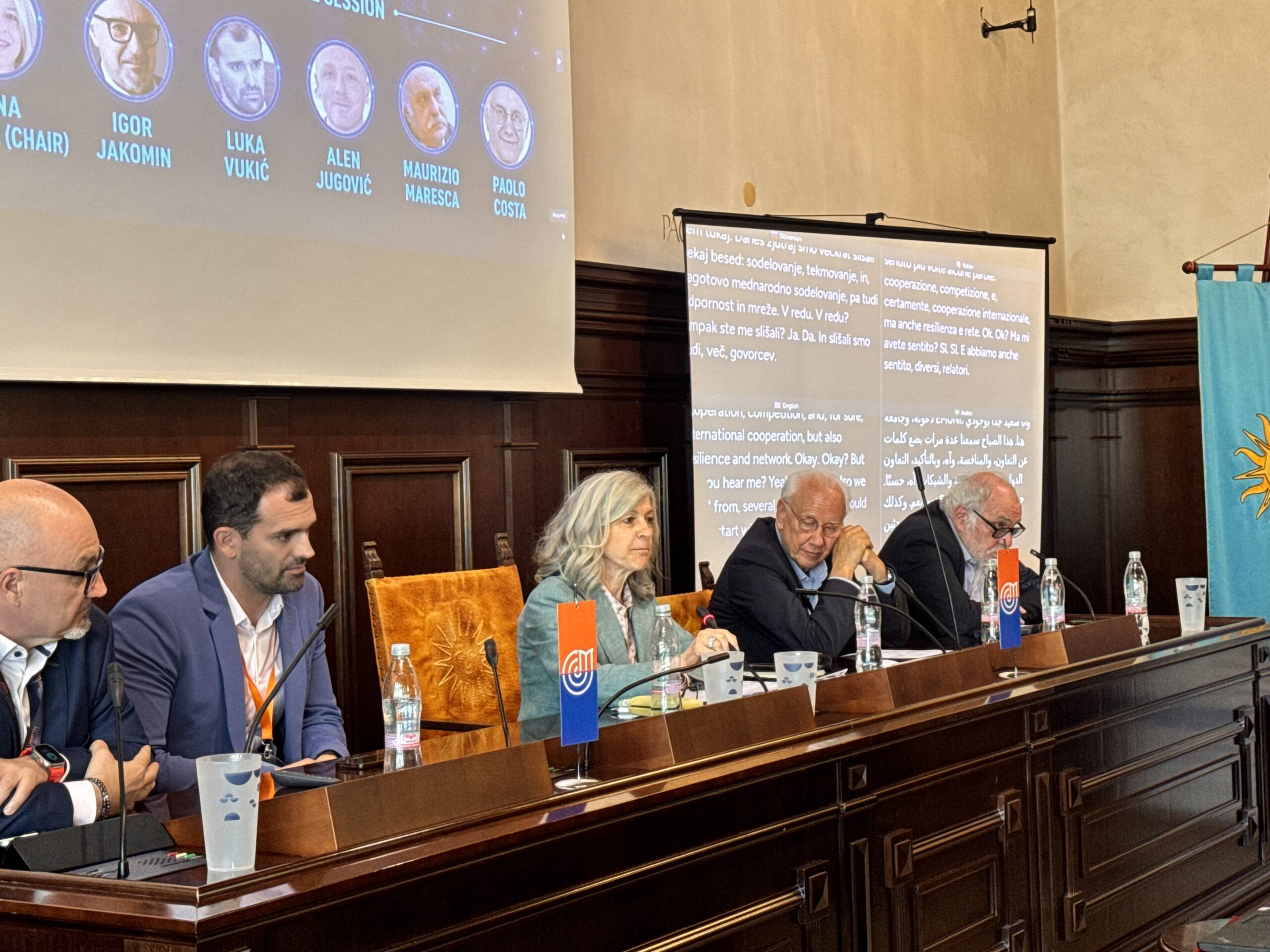
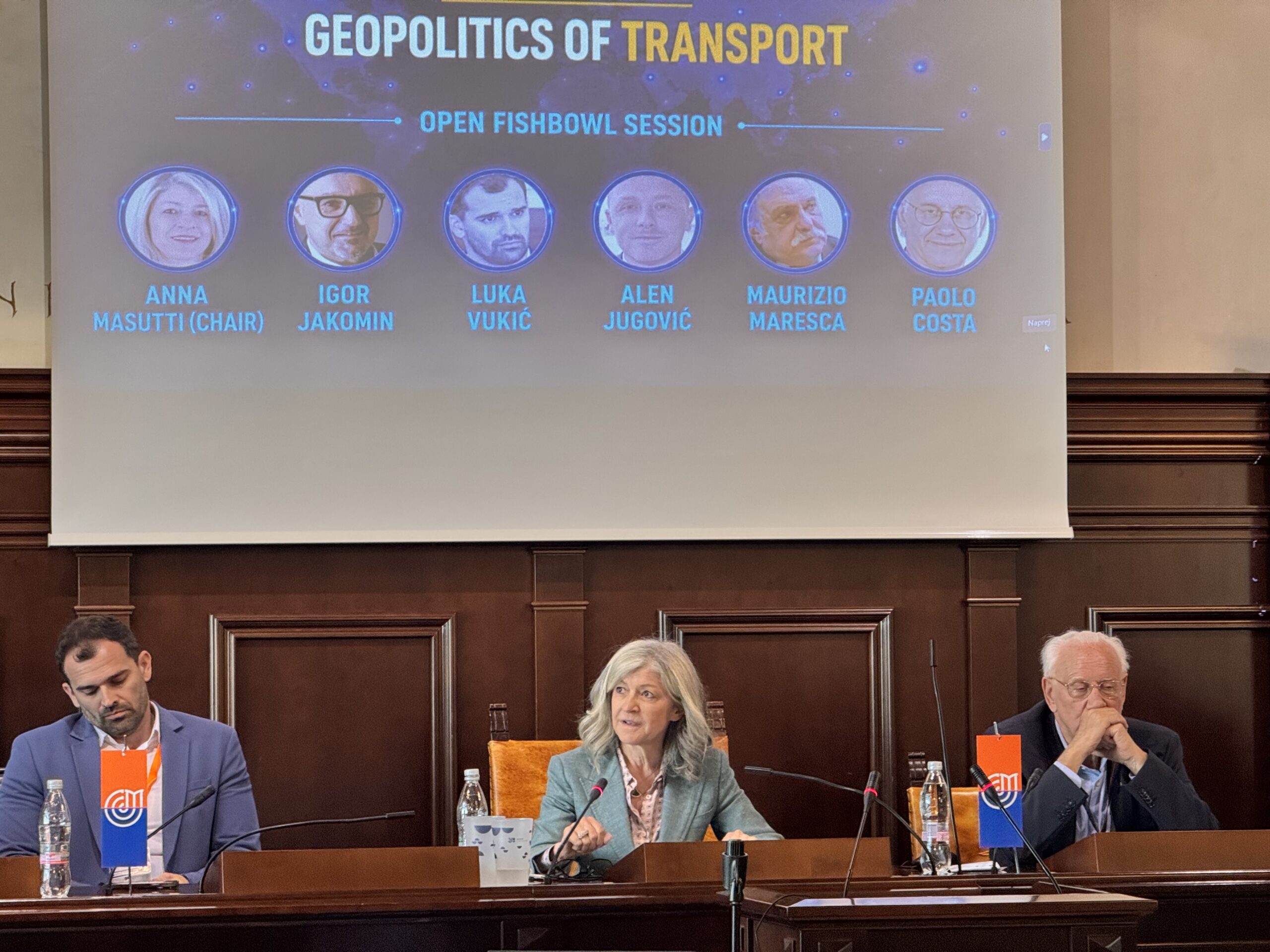
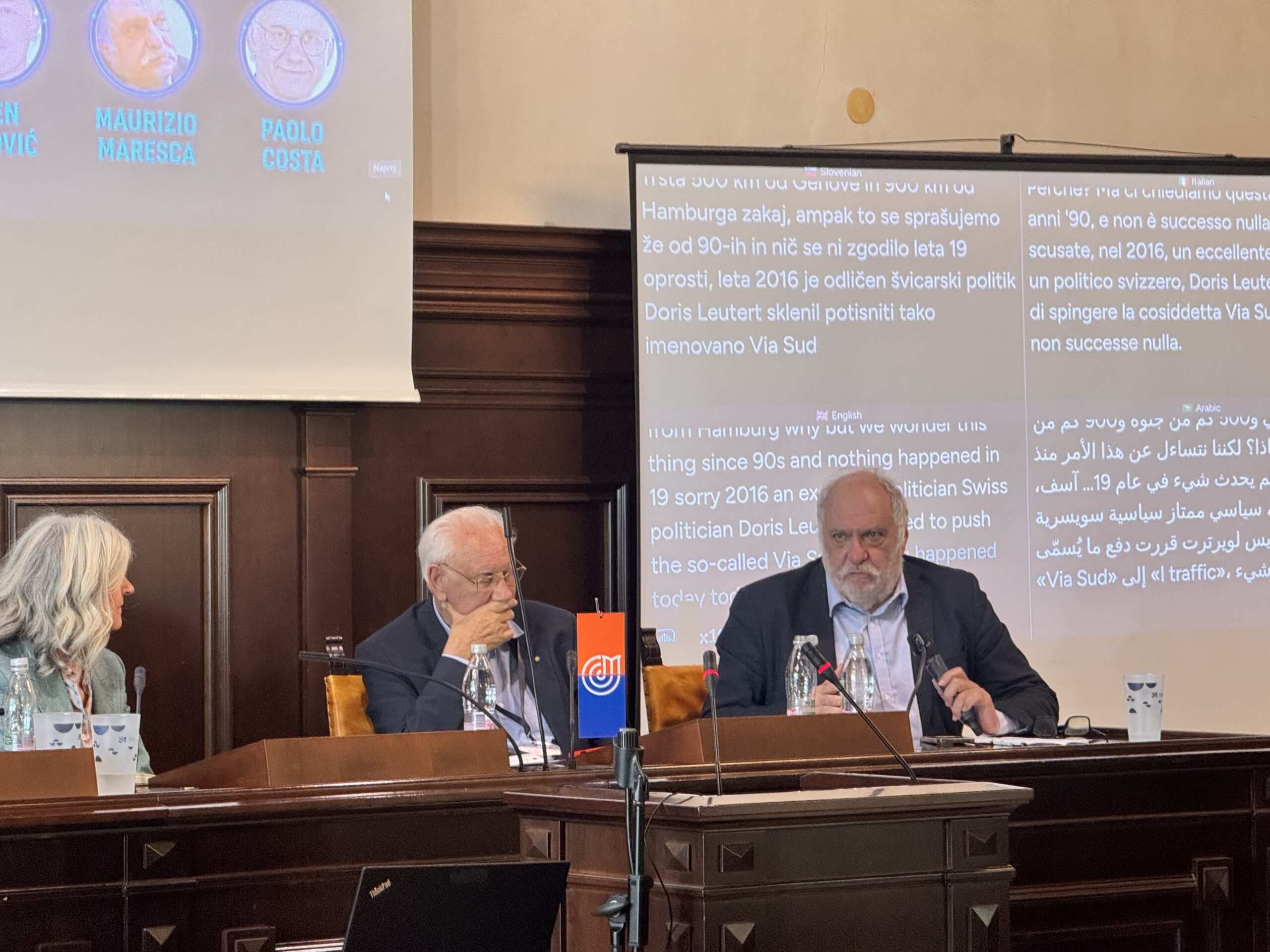
An interactive Open Fishbowl Session, moderated by Prof. Anna Masutti, University of Bologna, focused on future scenarios for Mediterranean port governance under the title “From Shorelines to Strategy: Mediterranean Scenarios from a Common Managing Agency to Operative Competition.” Prof. Dr. Igor Jakomin, EMUNI University, discussed interoperability, cooperation and competition among transport actors. Prof. Dr. Luka Vukić, University of Split, analysed port management models and the balance between public authorities and private operators. Prof. Maurizio Maresca, University of Udine, addressed regulation, competition and port governance in the European Union, while Prof. Paolo Costa, Ca’ Foscari University of Venice, raised the question of whether Europe needs a common European Port Authority.
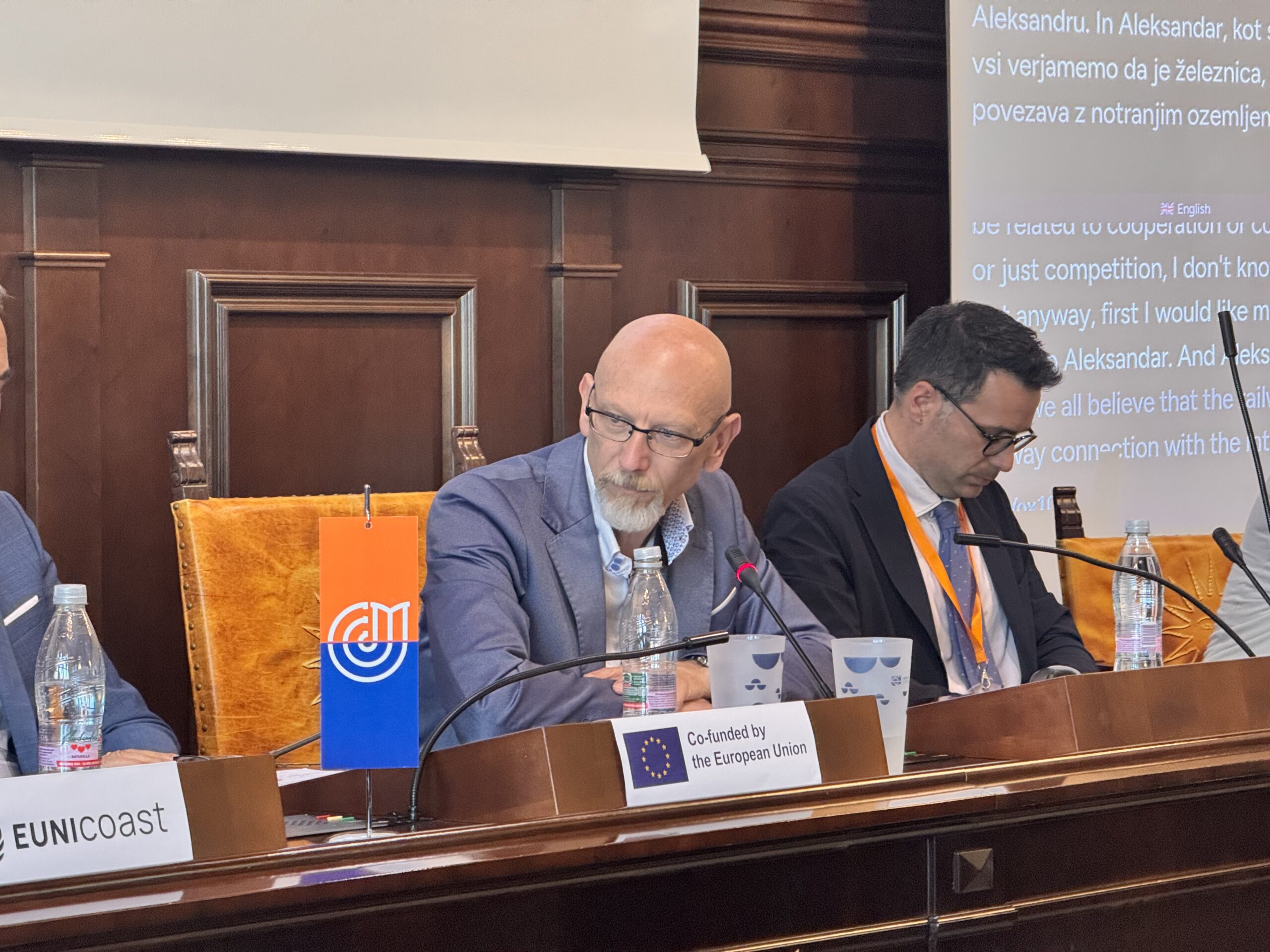
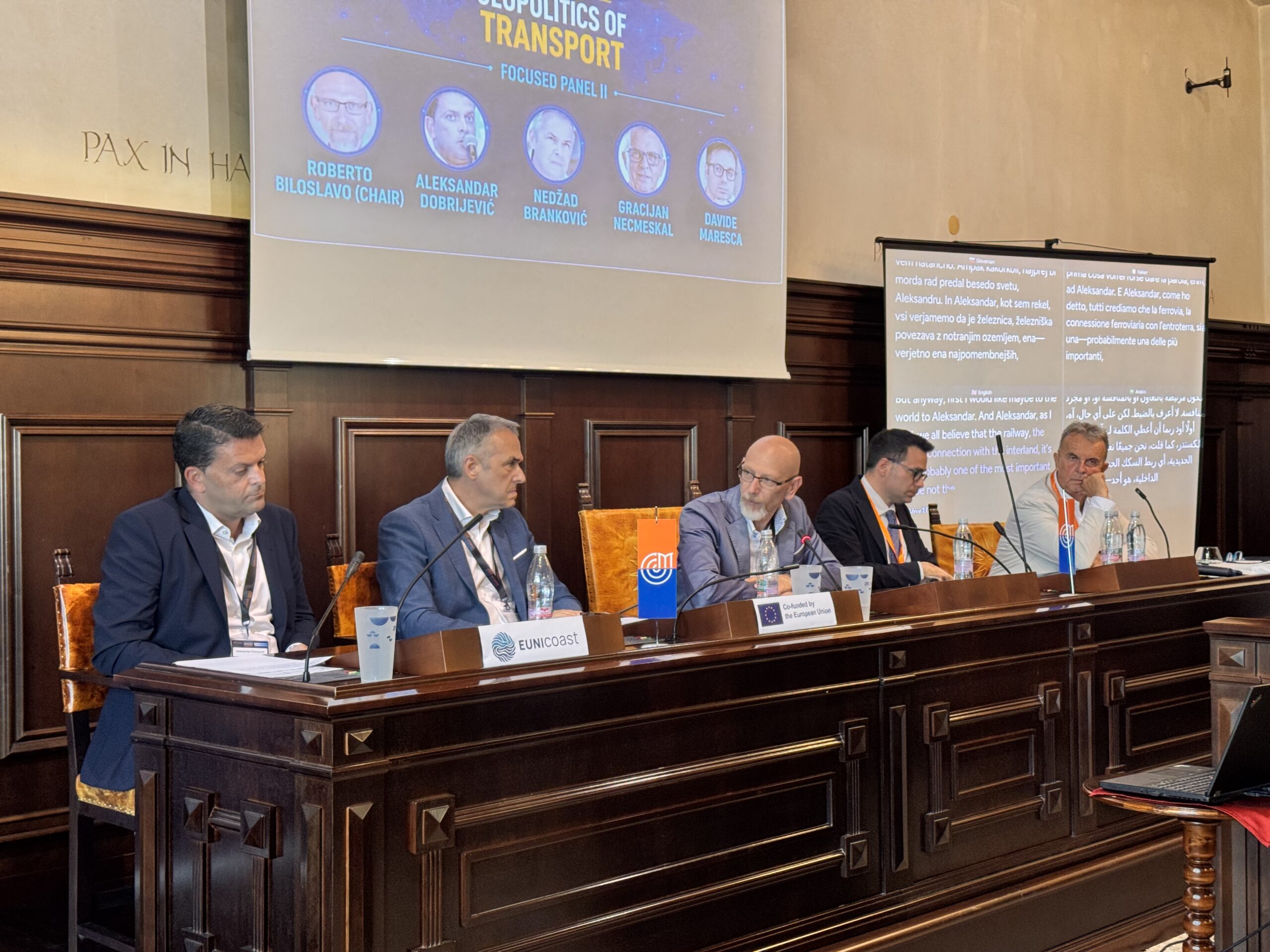
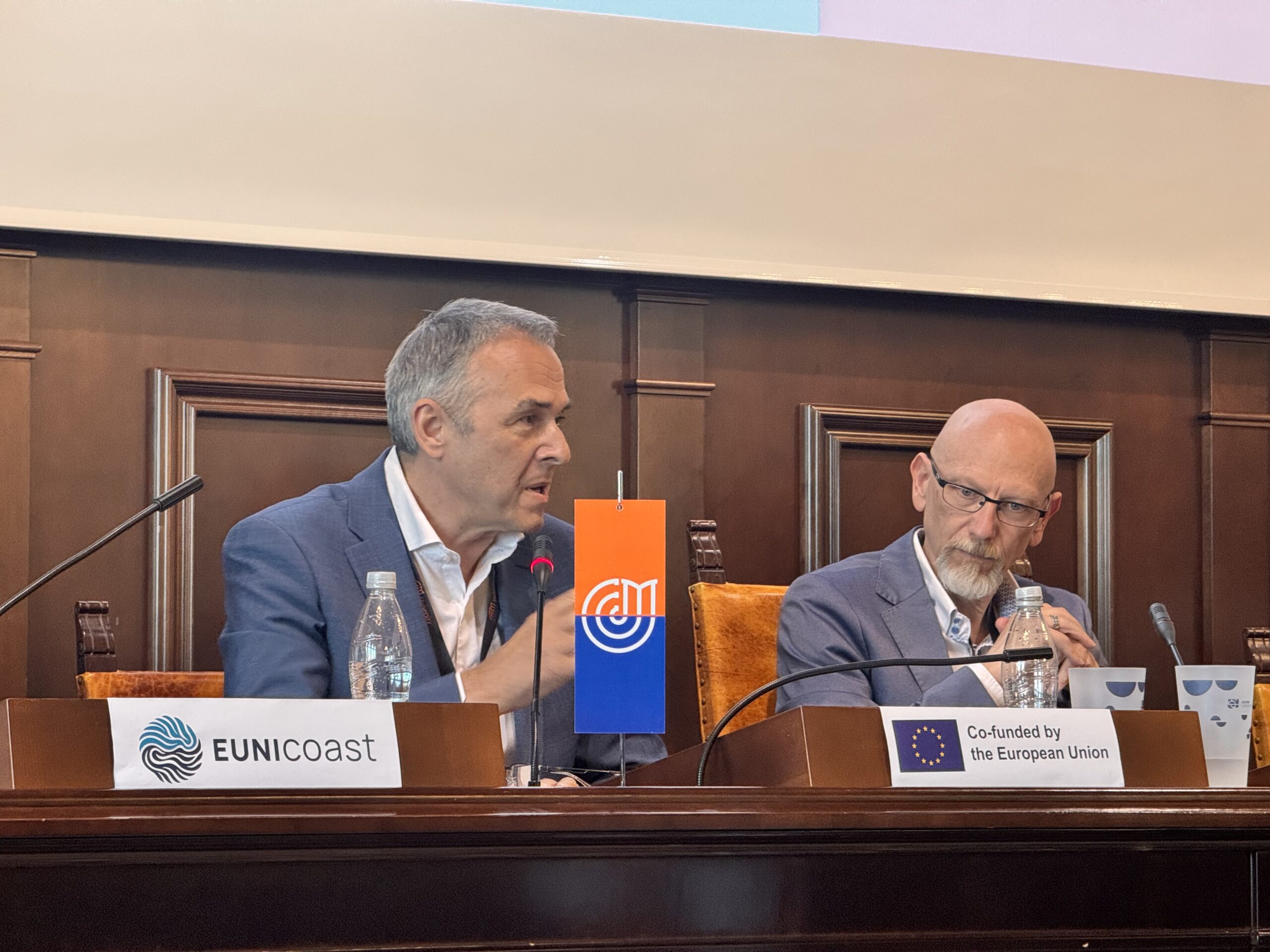
The conference concluded with Focused Panel II, chaired by Prof. Dr. Roberto Biloslavo, Vice President of EMUNI University, entitled “Shipowners and Railways as Market Makers: Public and Private Compatibility in View of EU Regulation, Infrastructure Investment and Corridor Redefinition.” The discussion highlighted the growing importance of rail-maritime integration in European logistics networks. Mr Aleksandar Dobrijević, Deputy Director of the Institute of Traffic and Transport (Slovenian Railways), presented the importance of strengthening connections between ports and Central Europe. Prof. Dr. Nedžad Branković, University of Sarajevo, discussed the role of railways in linking ports to markets, while Mr Gracijan Necmeskal, President of the Slovenian Ship and Freight Agents Association, addressed the dynamic relationship between shipowners and ports. Prof. Davide Maresca, University of Genova, concluded the panel with reflections on EU law, governance, cooperation and competition in the maritime sector.
By bringing together leading experts from academia, government, international organizations and industry, the conference reaffirmed EMUNI University’s role as a platform for dialogue on strategic challenges affecting transport, connectivity and sustainable development across the Euro-Mediterranean region. The discussions highlighted the crucial role of transport infrastructure not only in facilitating trade, but also in shaping economic resilience, geopolitical influence and regional cooperation in the decades ahead.
The event was part of the Ocean Literacy Activities, a Joint Strategic Initiative within the Erasmus+ project EUNICoast, the European University of Islands, Ports, and Coastal Territories and was cofinanced by the European Union.